The Hidden
Archetype
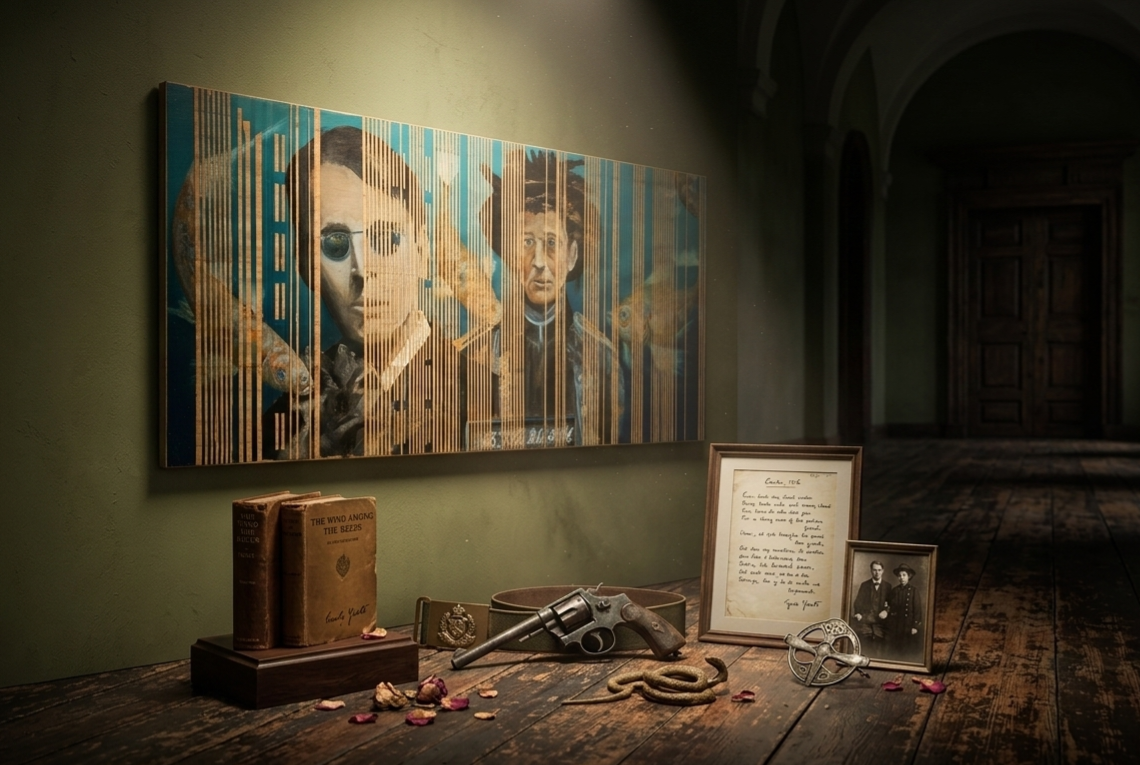
At a certain stage of my journey into the work of Jung, I began exploring the idea of opposites within the human psyche. Jung described two archetypal forces living within us: Anima and Animus. In Irish history I found two figures whose lives seemed to embody these inner principles.
The Jungian Threshold
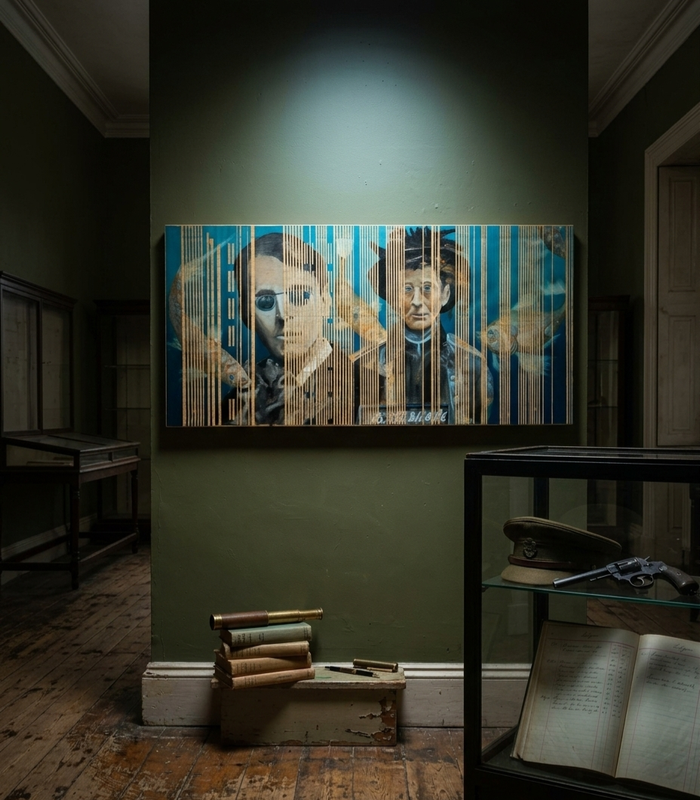
At a certain stage of my journey into Jung's work, I became increasingly occupied with the problem of opposites. Not abstract opposites, but living psychic tensions: intuition and force, contemplation and intervention, receptive depth and historical will. Jung gave these tensions names — Anima and Animus — not as decorative labels, but as inner principles through which the psyche seeks wholeness.
This painting grows from that threshold. It is not an illustration of theory. It is an attempt to let theory become image, and image become atmosphere.
Yeats as Anima
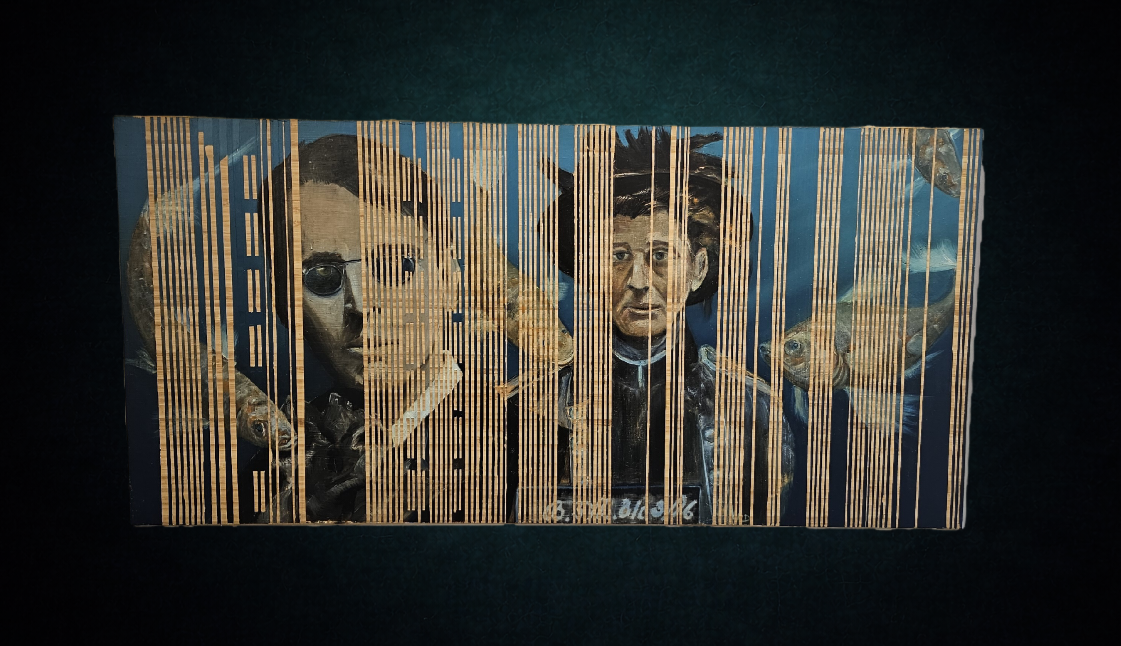
William Butler Yeats became, for me, an image of the Anima — the intuitive, poetic, and mystical dimension of the psyche. Through myth, symbolism, occult currents, and the unseen world, he sought meaning beyond ordinary reality. He is not merely a poet here. He is the figure of inward listening, of symbolic penetration, of the soul turning toward the invisible in search of order.
In Jungian terms, the anima is the feminine interiority of the male soul: intuition, relatedness, dream, image, mood, descent. Yeats carries these qualities with unusual force. His gaze in the painting is not outwardly heroic. It is searching, inward, receptive to what cannot be reduced to reason.
Markievicz as Animus
Opposite him stands Constance Markievicz, whom I interpreted as the Animus — the force of action, determination, leadership, and will that enters history and alters it. Her place in the painting is not only political. It is structural. She condenses courage, assertiveness, and the power to cross the boundary between idea and deed.
In Jungian psychology, the animus often represents the active, shaping, discriminating principle. In Markievicz I found a figure through whom this principle becomes visible without becoming merely doctrinal. She is resolve under pressure, energy that chooses incarnation rather than dream.
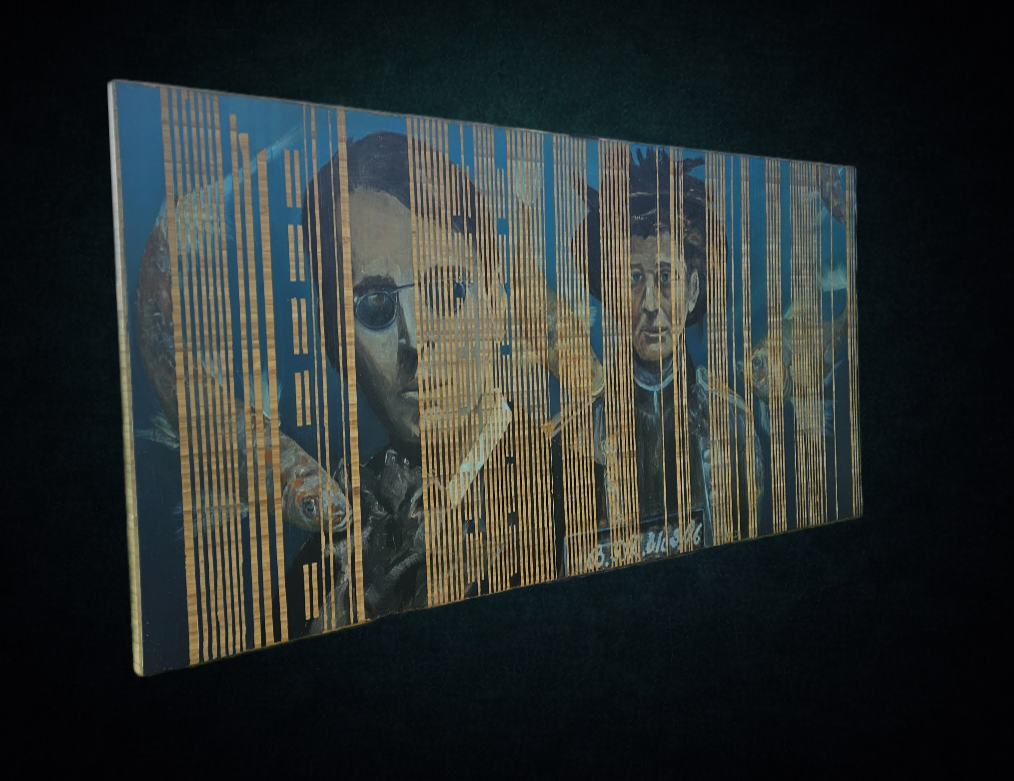
Submerged Space and Symbolic Fish
In the painting, both figures appear within a submerged space. The water suggests the unconscious — not only as depth, but as medium, pressure, and historical memory. The fish moving between them are not decorative motifs. They function as archetypal messengers emerging from psychic depths, crossing the interval between the two figures as if carrying fragments of a forgotten language.
The underwater field suspends ordinary chronology. Here action and intuition no longer belong to separate biographies. They become simultaneous. Ireland itself begins to appear not merely as a nation, but as a psychic reservoir in which poetry and revolt continue to circulate together.
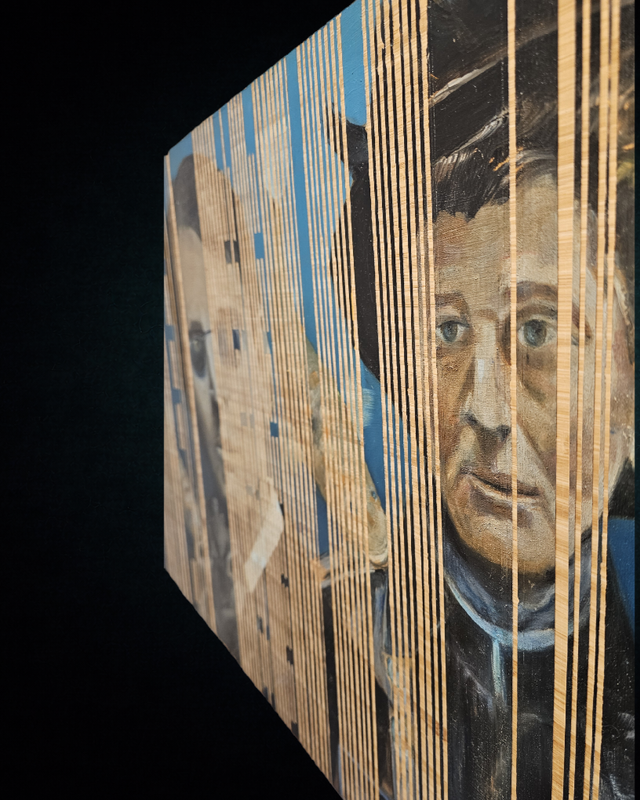
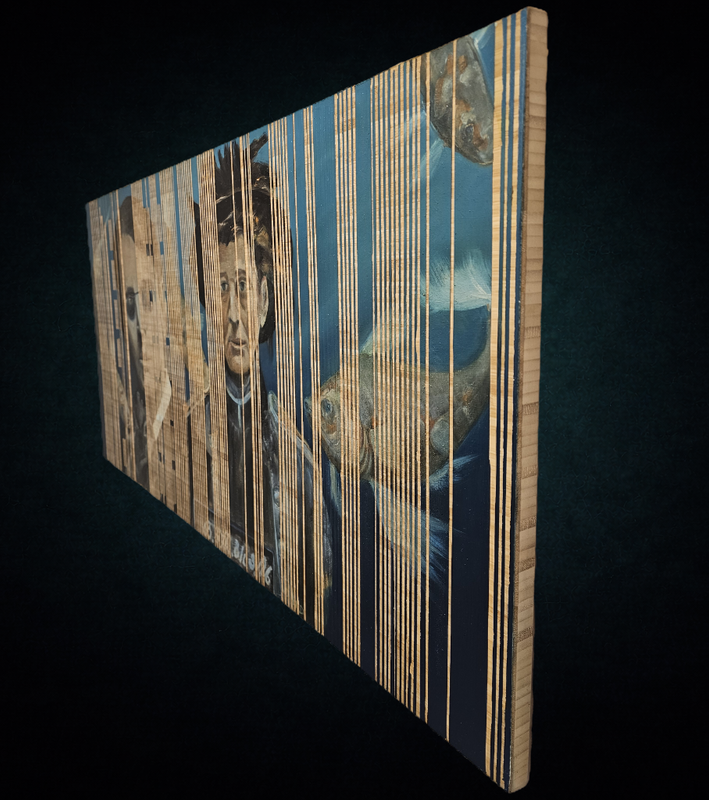
The Veil of Vertical Lines
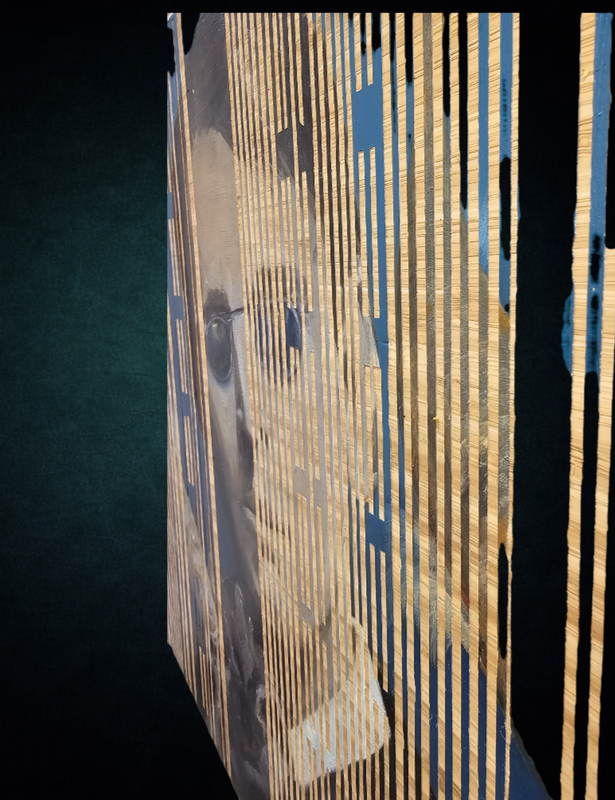
The vertical lines act as a veil. They remind us that archetypes are never encountered directly. We meet them through fragments, through cultural forms, through symbols, through the distortions of memory and imagination. No archetype arrives unveiled. It is always mediated — by history, by language, by collective dream, by personal projection.
What is hidden here is therefore not absent. It waits in partial visibility. The veil protects the image from becoming too literal, and protects the viewer from mistaking symbol for final possession.
Ireland as Psychic Memory
These figures also carry another charge. They belong to Irish cultural memory, and therefore the painting becomes not only a Jungian meditation but a reflection on Ireland itself. Yeats and Markievicz are not used here as historical citations. They are constellated as living presences within the cultural unconscious of the island.
Poetry and revolution, mysticism and action, contemplation and courage — these are not merely personal traits. They are energies through which collective memory arranges itself. The painting tries to hold that arrangement without reducing it to nationalism or psychology alone.
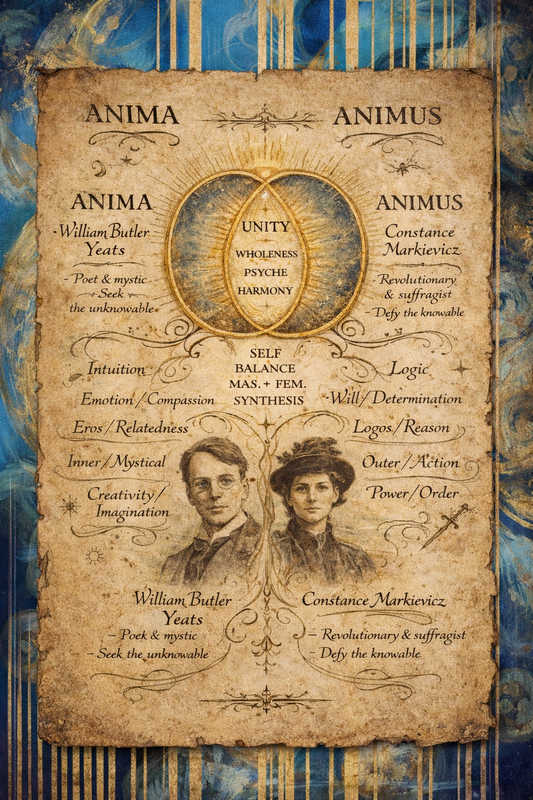
The Dialogue of Opposites
This work is my attempt to visualize the dialogue between opposites — intuition and action, poetry and revolution, receptive depth and decisive will. These are not enemies. Nor are they peacefully reconciled. They remain in tension, and precisely that tension gives psychic life its movement.
In this sense the painting belongs to a wider search: how to think the human soul not as a single stable identity, but as a field of oppositions seeking relation. Jung's great insight was that wholeness does not come from erasing difference, but from enduring it consciously. This canvas stands in that difficult interval.
Poem and Archetypal Echo
The accompanying poem deepens the same atmosphere. It names the duality openly, but lets it remain symbolic rather than doctrinal. Its cadence belongs to invocation. It reads less like explanation and more like a whispered recognition that these two presences continue to act within time.
In shadows deep, where spirits dwell,
Two faces gaze through veils that fell.
Markievicz, with courage bright,
A beacon in the darkest night.
Her spirit strong, her heart so bold,
Defies the chains of days of old.
Within her eyes, the animus gleams,
Strength and reason, woven dreams.
A warrior’s soul, a leader’s grace,
Reflecting power in her face.
Yeats stands beside, a mystic's gaze,
In search of truths through twilight haze.
Anima’s whisper, soft and clear,
Guides him through realms of fear.
In myth and legend, finds his way,
To secrets of both night and day.
The lines obscure, the stripes conceal,
Yet through the veil, the truths reveal.
For what was once, will be again,
In timeless cycles, without end.
A tribute to the duality,
Of human soul’s reality.
What rough beast, its hour come round at last,
Slouches towards Bethlehem to be born?
Their legacy, through time shall cast,
A bridge between the future and the past.
The Yeats line enters the work like a fracture. It reminds us that archetypes are not harmless ornaments of culture. They can open onto apocalypse, history, and the birth of forms we do not control. Thus the painting does not remain in symbolic serenity. A darker current moves beneath it.
"The Hidden Archetype" is part of an ongoing exploration of the dynamic interplay between feminine and masculine energies within each of us. Constance Markievicz and William Butler Yeats are placed here not as museum figures, but as living carriers of psychic forces that continue to shape the human interior and Ireland's cultural memory.
The work belongs to a wider attempt to visualize what normally remains hidden: that archetypes do not live outside us as concepts. They move through our imagination, our politics, our myths, and our acts of memory. Oil on board became the necessary medium because it allows the image to remain layered, submerged, and unresolved.
This painting does not choose between poetry and action. It holds them under the same water until they begin to look at one another.