SPIRIT OF TIME / AN ARTIST’S FORMATION
The place
I had already
found.
A dream. A drawing. A real place on Earth.
And a return that changed the meaning of the first discovery.
THE INNER PASSAGE / HILMA AF KLINT
Through the drawing.
Drag the image to move forward or back. Use Play for a continuous passage. Pause wherever you wish.
Through the drawing.
01 / A VIEW FROM ABOVE
Two discoveries.
The same place.
The first recognition arrived through looking. The second arrived through a name. The interval between them belongs to the story.
A map of creative formation. The dates of the drawings, the exact first route and the length of the interval remain open.
02 / THE SEARCH
A real Earth.
An inner recognition.
Watch the geographical reconstruction with its original ambient score. Sound begins only when you press Play.
Explore the interactive Earth · open the geographical study ↗
Current geographical study: an illustrative camera route, not a recording of the original search. Küsnacht remains provisional. The two visual passages accompany the story as separate thematic experiences.
03 / THE ESSAY
How a dark room
began to admit light.
An autobiographical essay by Aivar Drukalski · Ealoiontoir.
Explore the fourteen movements
01Before the names
Memory rarely returns an event in the order in which it happened. It brings back the part that remained unfinished: a word that passed without our understanding it, an image we retained without knowing why, a place that seemed to concern us before we could explain what the concern was. Years later, the same image appears again. Its walls have not changed, yet the person looking at them has acquired another way of seeing. What once stood apart can now be approached through a history.
For a long time, philosophy, spiritualism and the deeper study of psychology were distant territories for me. I had not set out to enter them. I came to art as an adult, carrying work, practical knowledge, encounters and experiences for which I had no settled account. I could make something, respond to a person, recognise an atmosphere, and still be unable to explain how these things belonged together. The difficulty was partly a difficulty of language. An experience could remain very precise within me while becoming uncertain as soon as I tried to tell it.
At NCAD, the work began with people and materials. There was Gerard in Dublin: his face, his voice, his words about rain, wind, birds and waking in the morning. There were photographs, cardboard, wax and painting. A person passed through different forms, and each material changed the responsibility of looking. The interpretations came later. Gerard had his own life and his own words before any association with Freud, Jung or an archetype entered my account.
Alongside the work, coincidences accumulated. An encounter on Dorset Street, a connection with someone from my earlier life in Riga, a dream whose space stayed in memory: one event seemed to answer another. I began writing “Coincidence” in the notebook. I could describe surprise, sketch relationships, try a definition. Yet the words did not make a complete structure. This is the period I now recall as a dark room. There were already things inside it. I could feel their presence and sometimes touch their outlines, but I could not yet see how to move between them.
02A story heard by another person
I told Beth O’Halloran, my teacher and curator at NCAD, about my coincidences and associations. This detail matters. The recommendation I remember arose from the story I was telling her: the experiences and connections I was trying to hold together. Listening, Beth associated what I described with Hilma af Klint and suggested that I read about her.
I cannot reconstruct Beth’s words as an exact quotation. I can recover the direction they opened. Something that had seemed private, difficult to communicate and almost enclosed within me received a response from another person. My story became the occasion for a recommendation. A name entered the room, and beyond that name lay reading I would never have thought to begin on my own.
The opening I remember was a human exchange: my account, Beth’s attention and the artist she brought into view. The student material also documents experiments with AI imagery; its presence in the wider NCAD period must remain visible. The precise order of those experiments and this recommendation is still being recovered. What opened this particular inquiry was being heard by another person, reading, and my own efforts to understand. It is easy now, with an archive and a map before me, to forget how small that first act was. Beth could not have known its eventual consequences. She listened and suggested a direction; I followed with curiosity and resistance.
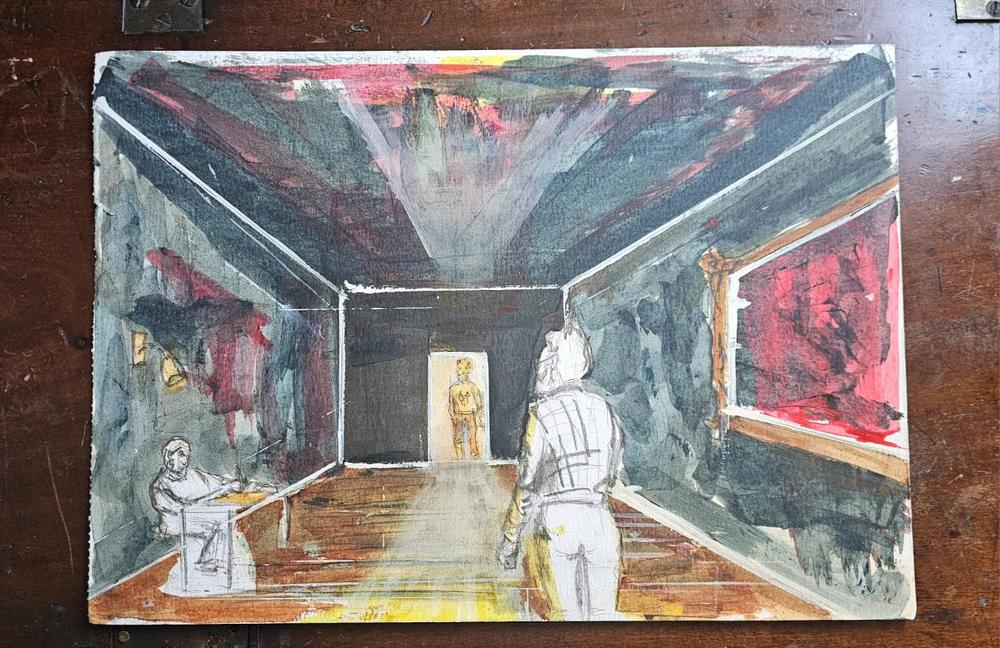
Beth also encouraged me to draw the dream improvisationally: to bring it out through drawing, to let the remembered space emerge without settling its meaning in advance. I made a series of sketches. A church, a lake and spatial associations appeared in the effort to recover what I carried within me. These drawings belong to my formation as an artist. Making them was an action within the search, a way of giving memory a surface on which I could look at it again.
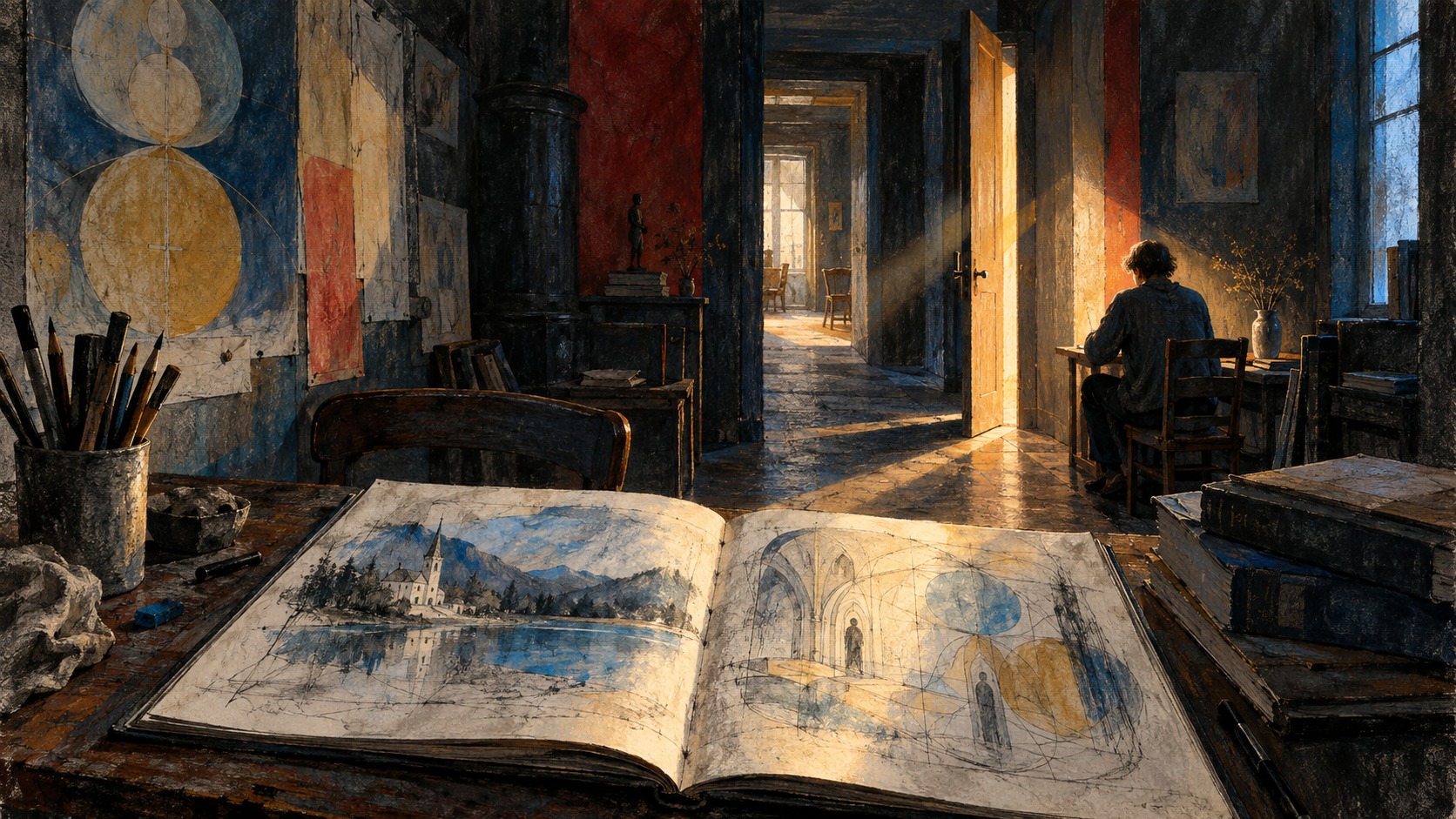
A story heard by another person opens reading; the room gradually acquires passages.
AI-generated interpretation · Imagined rooms, figures, architecture and landscape; not documentary evidence or an accurate route.Read this part of the story ↓03Hilma and the first light
My first reading about Hilma was brief. The spiritual dimension of her biography felt foreign to me. I did not immediately enter her world or accept its ideas. At times I moved quickly past the artist herself toward the questions that appeared around her. What stayed was the possibility that an artistic life could bring inner experience, images and sustained inquiry into a relationship worth investigating.
That possibility gave my own questions somewhere to continue. I did not suddenly know what my experiences meant. I began to find ways of approaching them. In the notebooks, Hilma’s name appears near studies of light and colour; elsewhere it stands beside “Own language” and Piet Mondrian. The pages preserve the coexistence of artistic research and a more difficult attempt to speak about what was happening to me. Their position in a notebook is a material trace, even where the exact date of an individual inscription remains uncertain.
When I say that Hilma began to illuminate the dark room, I mean a gradual alteration in visibility. A question acquired a continuation. A word made a distinction possible. A distinction allowed me to take another step. The room did not become transparent in a single revelation. Day by day, parts of it grew more legible. The experiences were still mine, still unresolved, but I could begin to think about their relations rather than remain alone with their intensity.
This is why Hilma became one of the principal beacons of my path. Her importance was larger than a reference in an art assignment. Through the direction Beth offered, the artist became an entrance to subjects from which I had previously been far removed. I could remain uncertain about a worldview and nevertheless follow the questions it had made available.
04Learning to continue a thought
In my remembered trajectory, Hilma leads toward transcendence, Kant and Jung. These names belong to different bodies of thought. They did not arrive as one teaching, and I did not understand them all at once. The sequence records the way my inquiry developed: something in reading about Hilma sent me toward philosophical questions; those questions made further psychological reading possible.
Kant brought the problem of the limits and conditions of knowing into view. My early use of “transcendence” was part of this search; I would later have to distinguish it from “transcendental.” I do not want to give my earlier self the precision that comes only after study. What mattered initially was the discovery that the relationship between an experience and what I could claim to know about it was itself a question.
Jung offered language for dreams, symbols, the unconscious and synchronicity. Such words could help me approach an experience without deciding its entire meaning immediately. What had I seen? What did I remember? When had a name become attached to an image? What belonged to the event, and what belonged to its later interpretation? I began to experience thinking as a sequence I could continue. A question could be clarified, connected with another, and carried into an action.
The map on my website can show this development with arrows. Living it involved reading, uncertainty, repetition and pauses. The new capacity was practical as well as intellectual: it allowed me to search, compare and follow a direction. I did not yet know that one branch would lead toward the place of a dream, or that a later return to Hilma would lead me back to the same building.
05Student notes: a mind taking form
The notebook is a working place. It contains exercises, references, practical possibilities, questions that belong to a course and questions that exceed it. The pages move between perspective, light, colour, a digital marketplace, the presence of a person, and a philosophical problem. Looking at them now, I do not see a finished system concealed beneath untidy handwriting. I see the labour of becoming able to think in a form I could return to.
Student notebook pages · swipe, tap to enlarge
The photographed Research Statement bears the academic year 2022/23. It records practical making, research into other artists, dreams and memory, and experiments in moving between physical work and AI imagery. It is an earlier working layer, distinct from the later account assembled on this website. The document also records Beth’s recommendation of Sophie Calle; her recommendation of Hilma and improvisational dream drawing belongs to my separately remembered testimony.
This is why I want to identify them clearly as my student notes at NCAD. They record my creative formation. A name written near a drawing, a tentative definition, a line connecting two circles: these are actions taken by a student who is finding ways to hold attention. The notebook keeps the transition between a feeling and a question. Its unfinished quality is part of what it preserves.
“Coincidence” appears as something to investigate. “Own language” appears as a demand. Hilma, Mondrian and Jung occur among studies whose relationships are still being made. A word can be copied before it is understood, and a drawing can establish a relation before I can express it in prose. I want the present map to retain that unequal development. It is possible to recognise a direction without possessing the vocabulary that will eventually describe it.
The spiritual and the technological also coexist on some pages. Notes concerning NFT platforms and digital tools sit within the same working collection as later spiritual questions. Their proximity shows a range of interest; it does not put every subject into one day or one doctrine. I was learning to bring unfamiliar material into the work. Each encounter required a different kind of attention. There were practical decisions about making, and there were questions about the person who was making them.
Drawing the dream became part of this education. Beth’s encouragement gave me a procedure: improvise, draw, allow the memory to take shape. I could follow a process without knowing where it would lead. The page offered a place where the image could become visible enough to guide another action. In the larger history, that modest procedure belongs between the story told aloud and the geographic search that followed.
06The alpine dream
On my website, this dream belongs to The Threshold. There is a bar in an alpine setting, a counter whose form changes as though different periods of time move through one object, an elderly man, an ornamented wall and a hidden door. Beyond it is a high room with paintings, a table and a lamp with exposed wires. A second man is there. The two take my left hand, raise it, and say: “That’s her.”
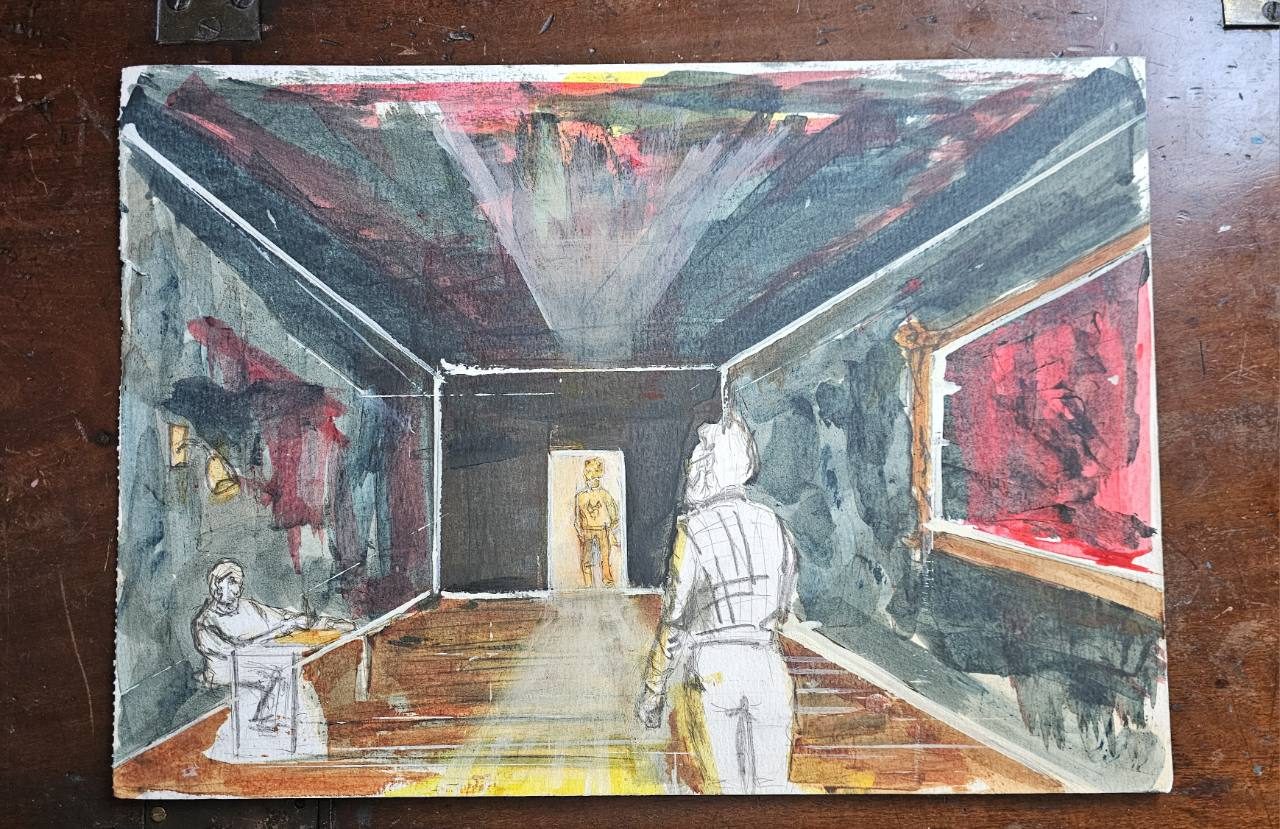
Toward the doorway.
Moving closer to the original drawing. A presentation of remembered space; not a measured room.The later telling contains names and interpretations. The dream itself did not come with a label saying Jung, Rothko or Goetheanum. It gave me a space and an experience that remained after waking. Later, a resemblance, a performance, a piece of reading or a face could alter how I understood that memory. In reconstructing the history, I need to preserve the distance between what was experienced and what was recognised afterward.
The published dream sketch is another part of this history. A drawing can retain a spatial relation that words lose: where a table stood, how a room opened, what enclosed it. It is a trace of remembering. My association with a church in drawing the place did not provide an architectural identification; it gave a form to the kind of space I remembered. The search would begin from this unresolved image and from the name I had started connecting with the dream.
The wider series includes coloured interiors, a bar and chandelier, figures meeting, an upward gesture, open hands and studies of faces. These are further reconstructions of the same dream, as I identify them now. They preserve different attempts to make the remembered scene visible. A figure does not acquire a historical identity merely because a later reading gives it a resemblance. Nor does the present arrangement of these photographs establish the order in which I made them.
The series of improvisational sketches that I now recall after Beth’s advice is another step requiring its own placement. I should not silently identify every dream drawing with the single published night sketch. What connects them is the act of recovering an image through the hand. In the series, church and lake associations helped bring the place into view; after this work, I searched for it through Jung’s geography. This is the order I remember, even while the absolute dates are still being recovered.
THE DREAM / ELEVEN RECONSTRUCTIONS
What the hand
could bring back.
Drag a drawing to turn it. Double-click to return. Open the original to look closely.
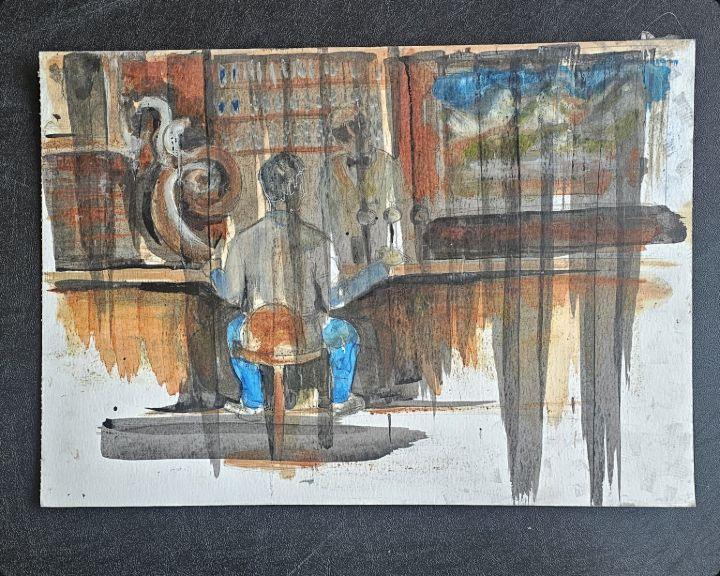
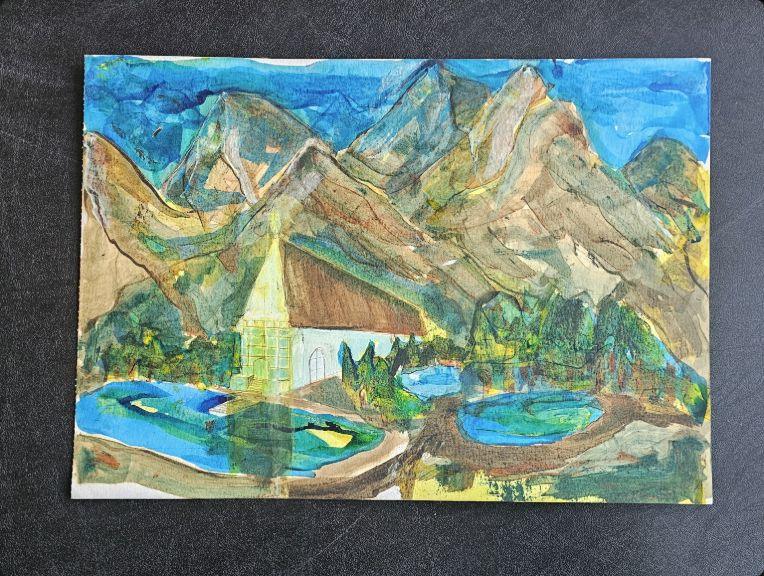
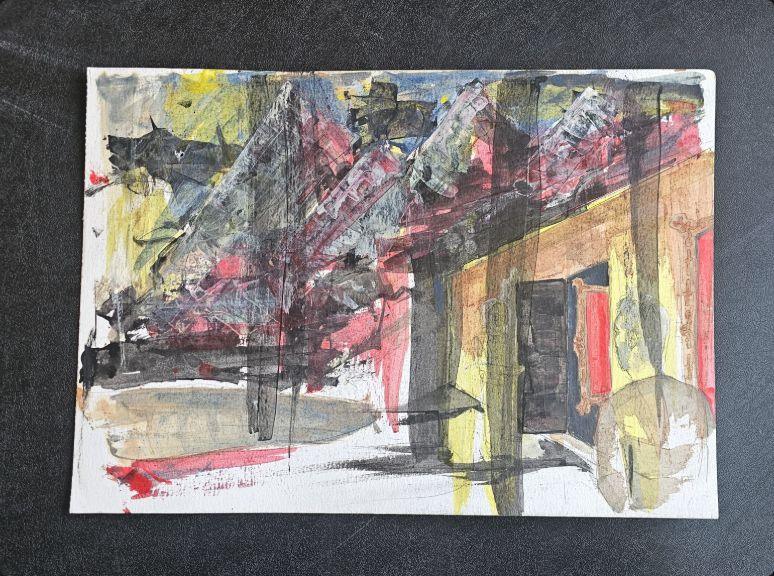
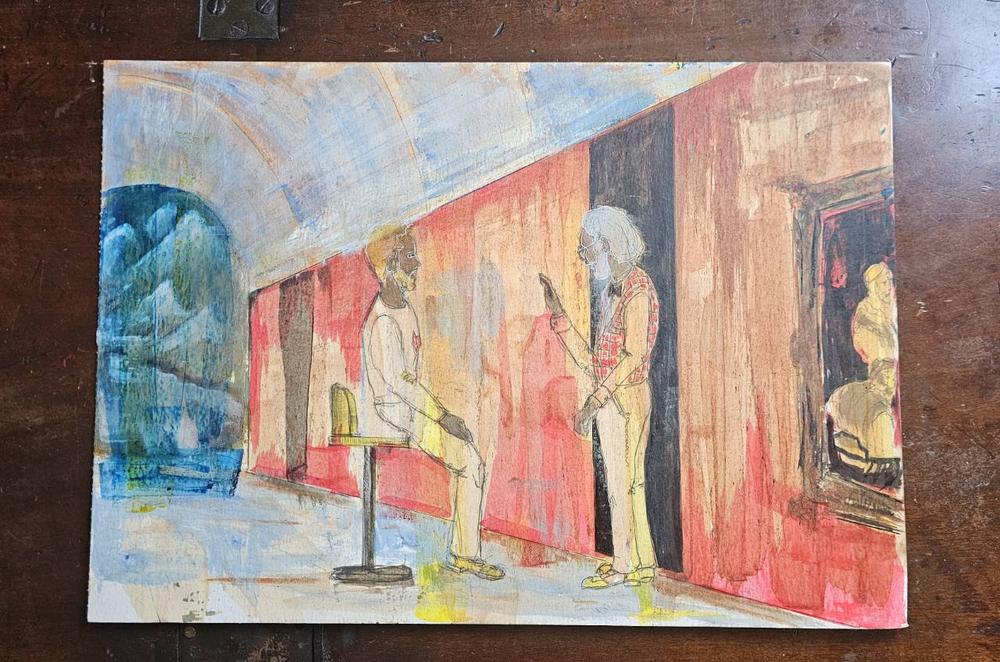
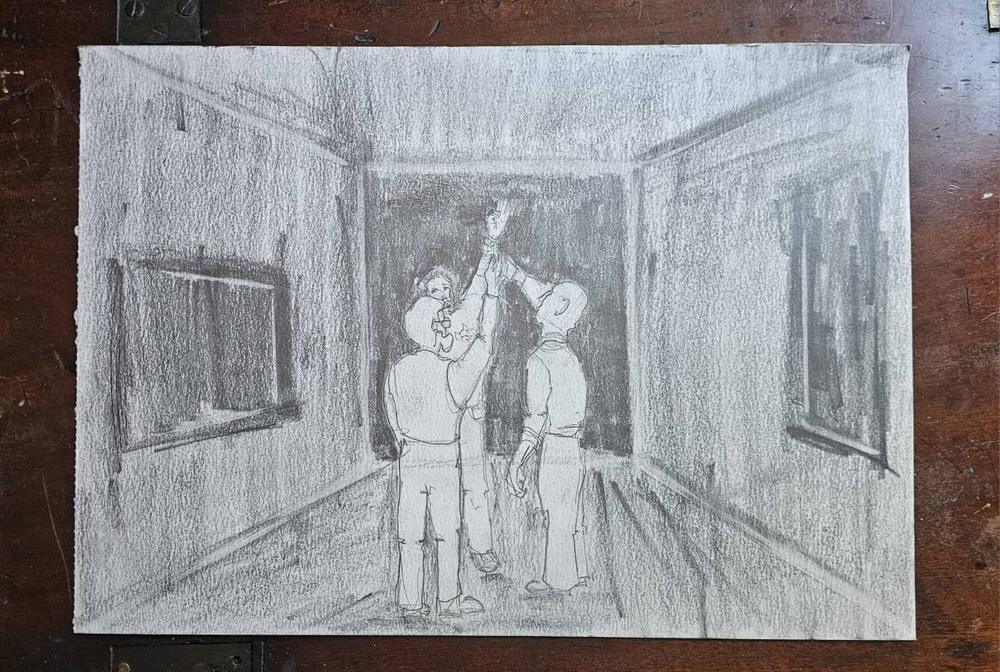
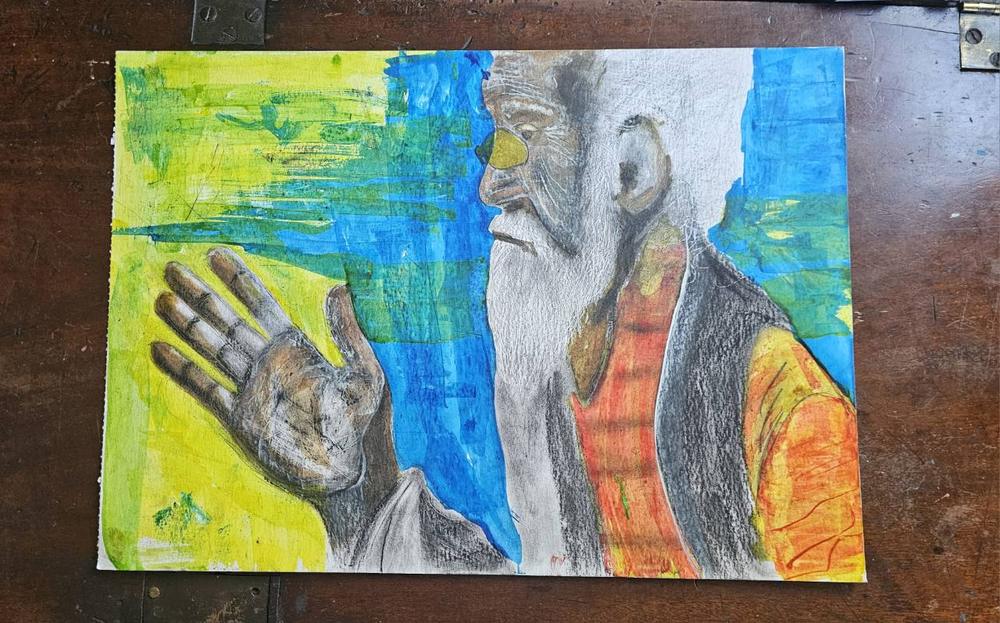
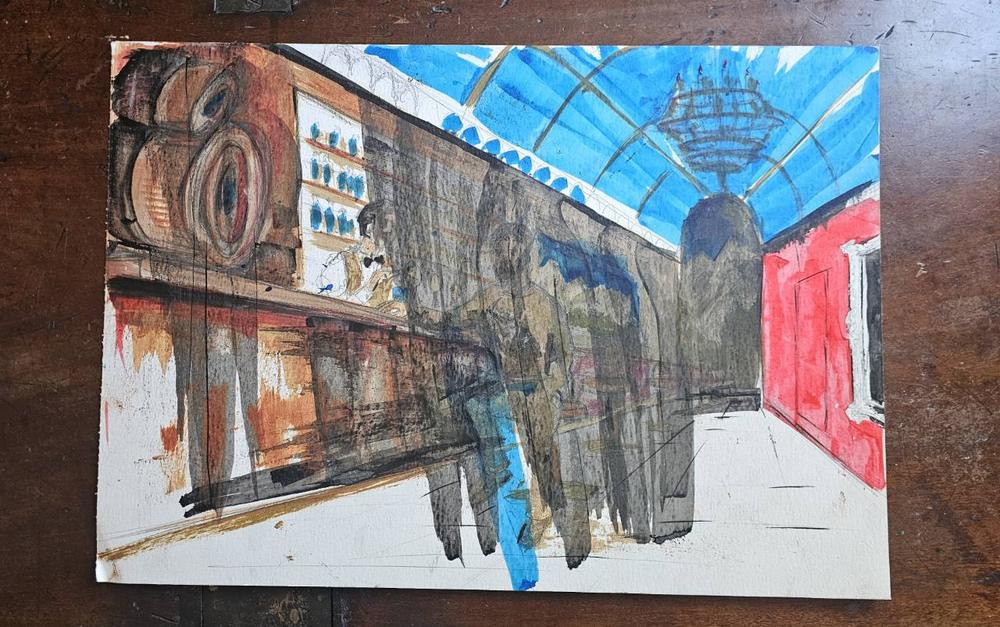
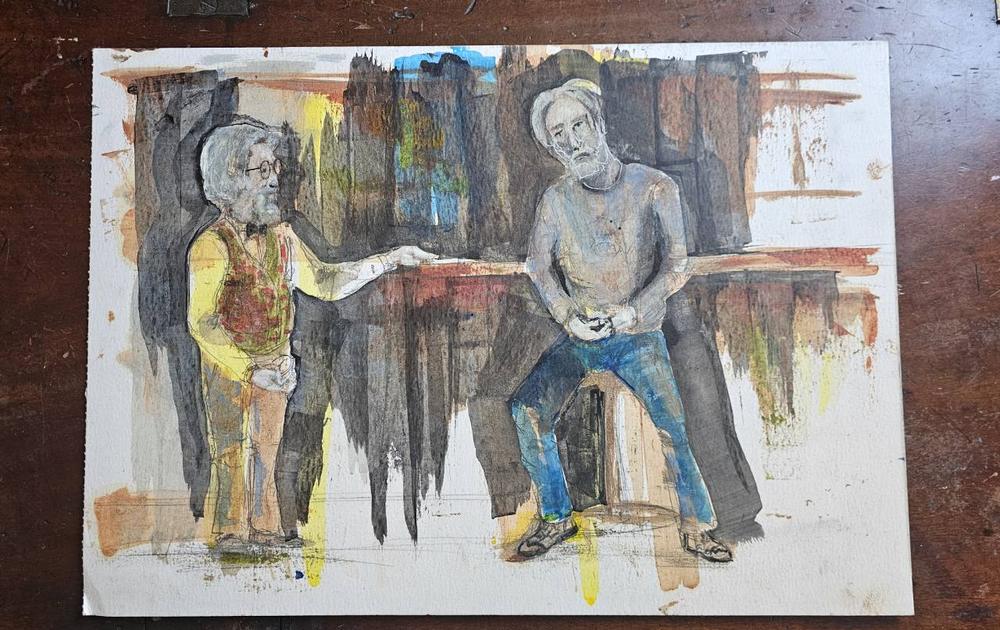
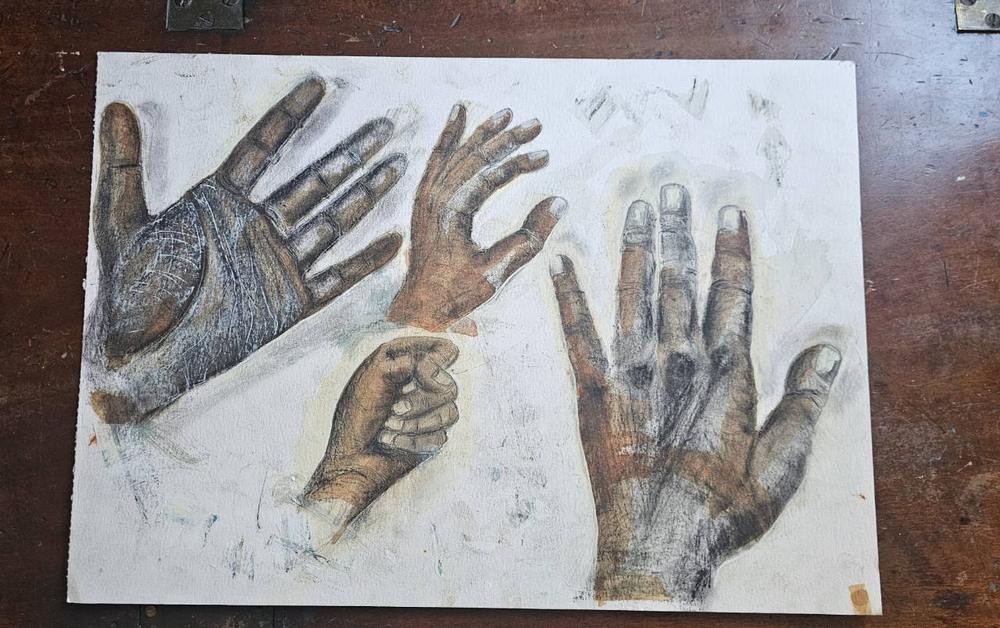
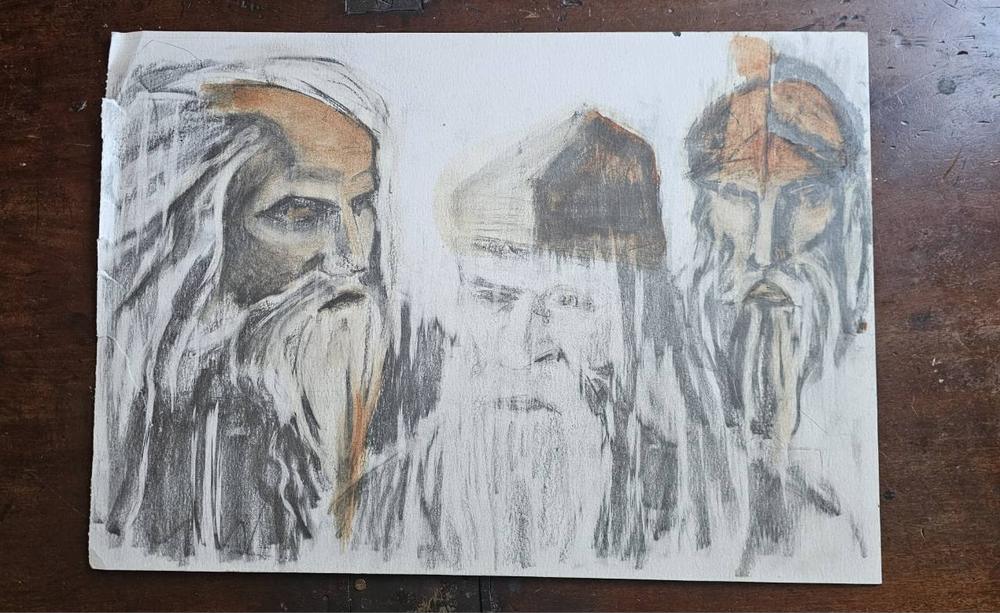
Eleven reconstructions of the same dream, as the author identifies them. Three earlier sketches and eight original photographs. Their individual dates remain open; this order does not establish the order of making. Drag to turn · open the original to enlarge.
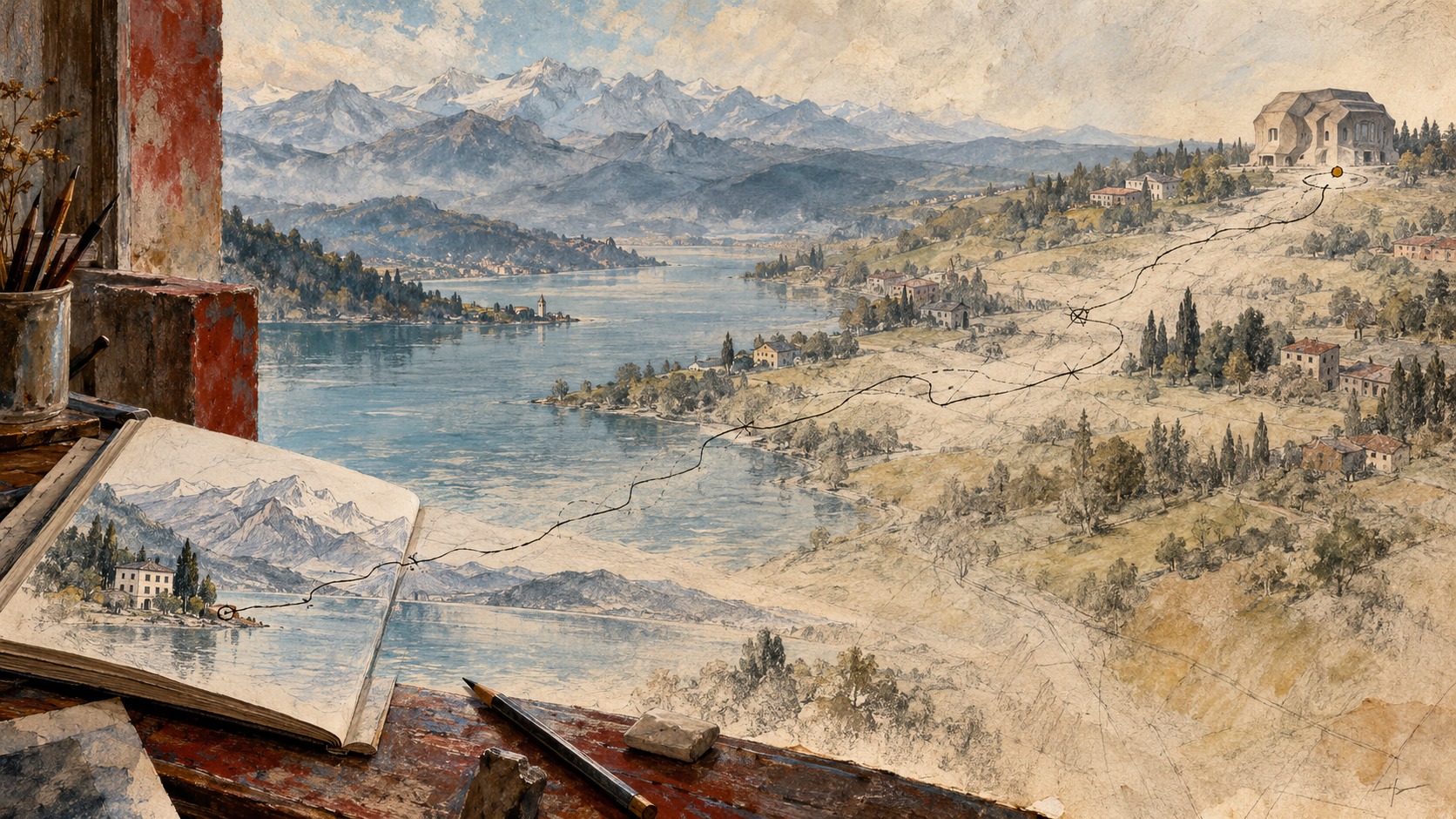
A remembered drawing becomes a search, a recognition and a place marked for later.
AI-generated interpretation · Imagined rooms, figures, architecture and landscape; not documentary evidence or an accurate route.Read this part of the story ↓07Ten minutes on a map
As I associated one of the dream figures with Jung, I went toward the geography of his life. I began from a place by a lake, then moved manually through Google Maps, changing scale and drawing closer to areas I associated with the mountain character of the dream. This was a search made from a remembered image and a developing line of thought. Jung provided a starting point; the dream’s landscape guided my attention.
I remember that it took about ten minutes. I cannot now reproduce every movement of the map or every search term. But I can describe what I was doing. I was looking for a correspondence with the place of the dream. I had not begun by searching for Steiner or for a centre of anthroposophy. The geographic search arose from the dream, my association with Jung, and the questions that had gradually become available to me.
In that movement I found the Goetheanum. The building was strange. It did not fit the familiar appearance of a conventional church. Yet I marked it inwardly as the place: “This is it.” I could not have given a complete reason for the recognition. Its force was sufficient for me to follow an Instagram account connected with the Goetheanum and to feel that I should go there one day. The place had acquired a personal address before I had understood its history.
At the same time, the spiritual setting seemed foreign. I could think “some kind of nonsense” and leave the inquiry there. Attraction and resistance occupied the same moment. I recognised something in the building and withheld commitment to the explanation surrounding it. The account remained followed; the image remained available; the possibility of a journey remained. Leaving the spiritual material aside did not erase the place.
A real place, somewhere on the Earth.
Küsnacht provisional · original search route unknown.
Illustrative reconstruction · current satellite imagery and elevation · Cesium / Esri and imagery contributors · historical cursor path unknown.
The time between two looks
The length of the pause is not established here. Dates are still being recovered.
08The time between two looks
The pause was not empty. The dream stayed in memory, Hilma remained among the things I had read, Jung remained within the growing inquiry, and the building had a place in my private geography. These elements did not yet form a single account. I could carry them separately without knowing what would later bring them together.
This changes the geometry of the story. The search through Jung and the later return through Hilma were branches within one developing life of attention. Their immediate tasks differed. One sought a place corresponding to a dream; the other opened concepts and, later, historical relationships. Both belonged to the person who had begun to move through the room that Beth’s recommendation helped illuminate.
The archive contains several earlier contacts with the Goetheanum. Their dates help recover the history without making each contact identical to the ten-minute search. Seeing, recognising, following an account, sending a link and understanding a historical relationship are different actions. An image can be familiar long before its significance becomes clear. The eventual shock would depend on that delay.
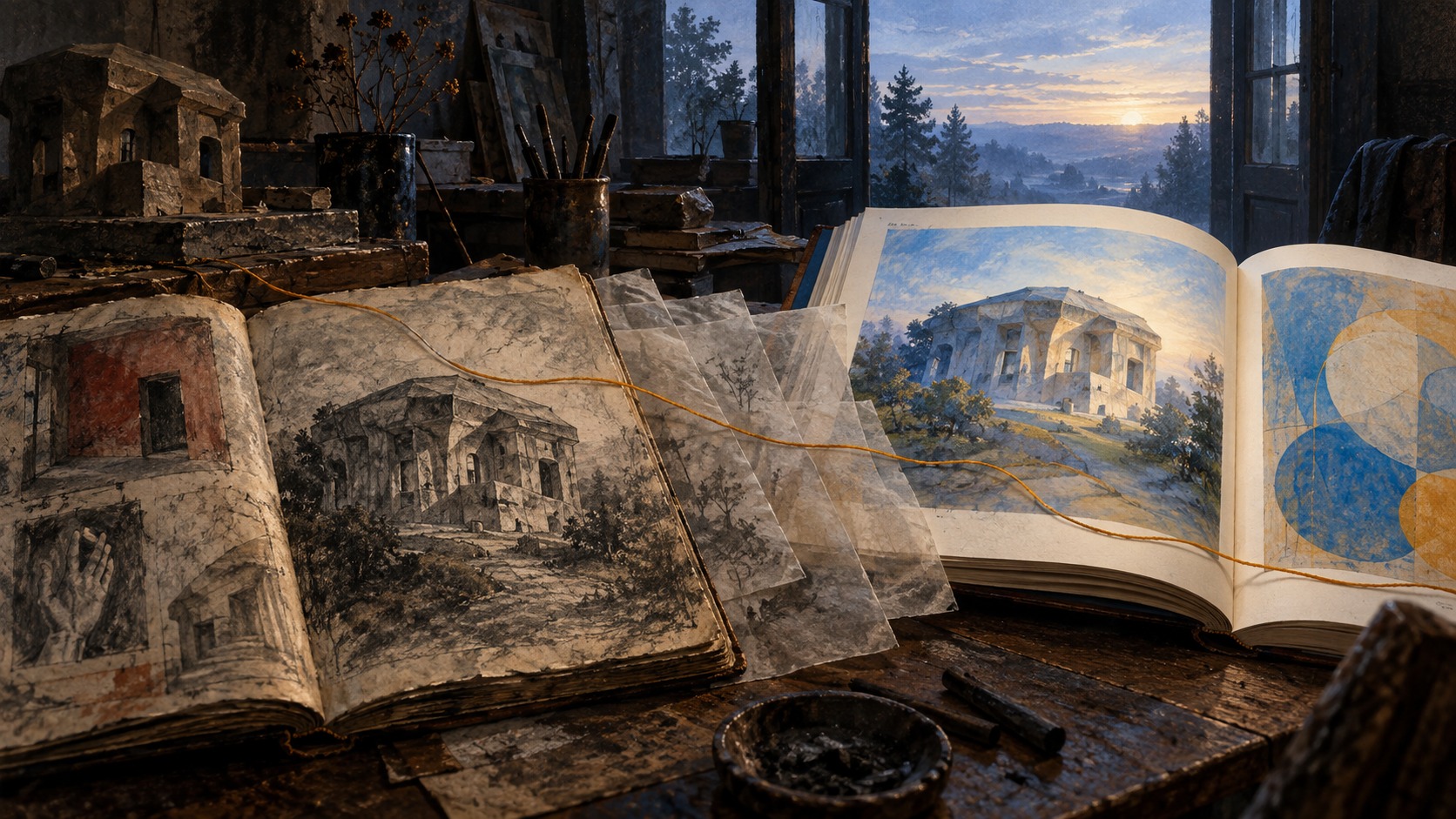
Years later, a return to Hilma brings an already retained image into a different light.
AI-generated interpretation · Imagined rooms, figures, architecture and landscape; not documentary evidence or an accurate route.Read this part of the story ↓09A return near New Year
I remember returning to Hilma around New Year, possibly on 31 December or in the early morning of 1 January, around the boundary of 2023 and 2024. The exact day and hour remain approximate. In my recent telling, it is about six in the morning; another account gives an earlier hour.
I began reading about Hilma again. This time the name Rudolf Steiner caught my attention, along with her connections to Dornach and the anthroposophical milieu. A book once left aside can become readable when the reader has changed the question brought to it. The biographical thread now held something I wanted to follow. I entered Steiner’s name into Google out of interest, almost intuitively.
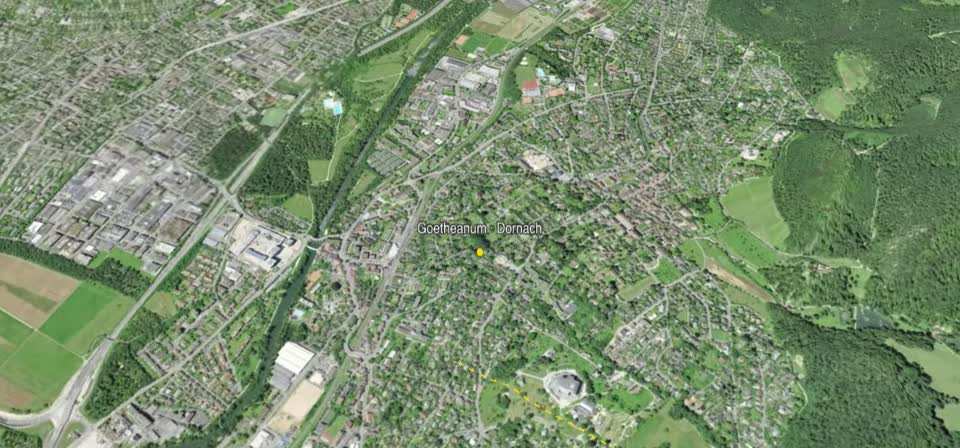
Near New Year 2023/24 · about six in the morning, by the author’s recollection · date and hour approximate
An image of the Goetheanum appeared among the first things I saw. It was the building I had already found and marked as the place of the dream. The search result brought back the earlier map, the recognition, the account I had followed and the still unfulfilled wish to visit. All those earlier acts suddenly stood beside the name of the artist Beth had suggested.
I remember the numinous shock. It was difficult to take in that this long circuit of reading and searching had brought me to the same place. The image of finding a needle in a haystack conveys the feeling of that convergence. The force lay in the history I brought to the screen: a dream, a human recommendation, unfamiliar concepts, a geographic search, a pause, and a return to an artist’s biography. In that instant the earlier image acquired another depth.
10Hilma, Steiner and Dornach
Dornach is the name that situates the returning building in an actual history. Hilma was Swedish; she was not an artist who simply originated in this place. Her connection with Dornach developed through her engagement with Steiner’s teaching and the anthroposophical movement. The history gave a concrete relationship to what I had encountered as a strange, personally charged image.


The Foundation’s chronology records her first meeting with Steiner in Sweden in 1908 and her first journey to Dornach in October 1920, with Thomasine Andersson. She became a lifelong member of the Anthroposophical Society that month and made further journeys over the following decade. During one stay, she showed Steiner her Blue Books, which brought reproductions of her paintings into a portable form. These details locate a sustained relationship rather than a single biographical coincidence.
The building has its own history as well. The first Goetheanum was destroyed by fire at the end of 1922. Steiner subsequently developed the model for a second building, which opened in 1928. The concrete building shown on this page is the second Goetheanum. Distinguishing the two matters when we picture the place Hilma visited across different years. Her connection belongs to Dornach and its changing institution, rather than to one unchanging photograph.
 GoetheanumDream sketch

When I learned that she had spent time there, the building entered a network of people, work and questions. A photograph that I had retained as the place of a dream acquired a historical setting. This did not erase my initial experience. It changed the number of ways in which I could approach it. The first recognition had been mine; the history extended beyond me.
I understand now why the biography could carry such force. I had first encountered Hilma through a recommendation about my own experiences. Her name had opened unfamiliar reading and helped me develop a route of thought. Through another branch of that inquiry I had found the building. Returning to her life brought the building into view once more. The distance between these stages is what gave the relationship its extraordinary personal weight.
11Anthroposophy enters the inquiry
Before this stage, a spiritual setting could be enough to make me withdraw. The attraction of the place and the foreignness of its language coexisted. After the return, I could no longer leave the entire relationship untouched. I wanted to understand why Steiner’s name belonged to Hilma’s life and to the building that had already taken a place in mine.
Anthroposophy entered as a field to study. Within its own account, it proposes a path of knowledge concerning the human being and spiritual life; the Goetheanum connects that inquiry with artistic, educational and other forms of work. The institution’s present study programme provides one way to see how it describes its project. That self-description is a source for the tradition’s aims, while my encounter with it belongs to the history of my attention.
Its language altered the kinds of questions I was willing to ask. A notebook diagram might distinguish physical, etheric and astral aspects and the “I.” Rosicrucian phrases might open another strand of reading. I could encounter these as concepts within a tradition and try to understand their relationships. Reading them did not by itself settle the nature of my dream or the cause of my recognitions. It enlarged the territory in which those questions could be examined.
For my formation, the important change was the willingness to remain with unfamiliar material long enough to distinguish it. At first “spiritual” could name everything I felt distant from. Later, individual terms, authors, practices and historical settings became visible. The dark room grew less uniform. I could recognise differences between traditions, as well as differences between a belief, a remembered experience and an argument.
The process continued through conversation. Derek belongs to a later stage of that inquiry, with his own perspective and circumstances. The book, the page and the living interlocutor do different things. A person can question a connection that looks persuasive in solitude; a drawing can retain something a conversation passes over; an archive can return an earlier version that memory has revised. The broader picture must make room for these different kinds of encounter.
12What the return opened
After this recognition I went more deeply into Steiner and anthroposophy. Rosicrucian language and diagrams of the human being also appear in my notebooks. These pages show an expanding field of study; their exact position in the sequence still needs to be established. Later conversations, including those with Derek, belong to further stages. The briefness of recognising a picture should not hide the duration of learning that followed it.
There is a historical relationship here that can be checked separately from my experience. The Hilma af Klint Foundation records her connections with Steiner, membership of the Anthroposophical Society and periods spent in Dornach. I use that history carefully. Saying that she was connected with this milieu does not require inventing a formal course in the building or assigning Steiner a simple role as her guru. The historical thread was sufficient to carry my attention onward.
The notebooks also preserve doubt. In an early reflection, I allow that the brain may be playing with us, acknowledge that I am not objective about my own process, and propose showing the whole story to a viewer who can make a judgement. That hesitation belongs inside the inquiry. I can take the power of an experience seriously while remaining uncertain about its mechanism. The task is to describe its sequence with enough care that another person can approach it.
13The room becoming visible
When I return to the beginning now, I see how a thought became an action. A difficult experience became a story; the story met Beth’s attention; her response opened reading; reading created distinctions; distinctions made a further search possible. Each action returned something that still needed to be understood. This was the gradual illumination I am trying to describe.
Hilma’s importance resides in that movement. Through her, the room began to show its passages. Kant and Jung entered a life that had previously been distant from their questions. A dream could be approached through a geographic search. A place could be found, resisted and retained. A later return to the same artist could disclose a relationship that changed the meaning of the first finding. The path had developed before I was able to look down upon its shape.
I call this an extraordinary introduction, an excursion I had never planned. Its wonder is part of my experience. The route remains something I can describe: the story told to Beth, Hilma, philosophical questions, Jung, the alpine dream, the map, the Goetheanum, the pause, Hilma again, Steiner, the same building, and the deeper inquiry that followed. Recovering the actions gives the wonder a history rather than taking it away.
The wish to visit remains within the story. A map could lead to the building and reading could situate it in history; being physically present would be another encounter, with its own time and meaning. The earlier recognition has therefore not exhausted itself. It continues as an open question. The dark room has become light enough for me to see another passage. The history continues in moving through it.
14Seeing the formation from above
The wider website holds other parts of this becoming. The Threshold gives the alpine dream its own space. Transformation / Threat follows a painting through its making and through meanings that became attached to it later; that page also leads directly to The Threshold. Gerard preserves the human voice and the movement through materials. These pages belong beside the Hilma route because they allow the creative life around it to remain visible.
I do not want to turn every neighbouring work into a cause of the next event. Their relation is sometimes a shared problem: how an image is made, how it is read afterward, how a person recognises something before finding adequate words. The public pages are later compositions. The student notes retain a different register, closer to the attempts and uncertainties of the work. Reading both gives depth to the present reconstruction.
From above, the path can look beautifully concise. Beth, Hilma, Kant, Jung, sketches, map, Goetheanum, a pause, Hilma again, Steiner, anthroposophy. But the value of the view is that it helps us descend again to particular actions. I told a story. Someone listened. I read. I drew. I searched. I followed an account. I left an explanation aside. I returned to a biography. I entered a name and recognised a building. Each action has its own scale and its own time.
The wonder lies in seeing how these acts became related within one life. I had been distant from the very territory into which the inquiry led me. Through a sequence of human attention, artistic work and reading, I became able to move there. Hilma remains a foundation of that passage: first as an opening, later as a return. The map is most faithful when its clarity preserves the slow formation that made the clarity possible.
THE OUTER PASSAGE / HILMA AF KLINT
From a name to a place.
Jung beside the lake. The remembered mountain horizon. The Goetheanum. Drag or scroll to follow the passage.
A VISUAL ATLAS / FIVE IMAGINED CONNECTIONS
One place. More than one way back.
These five collages bring the dream, the drawings, the search and the later return into a single field of attention. They are AI-generated artistic interpretations, not documentary photographs or accurate geographical maps. Buildings, portraits, inscriptions and routes may be imagined. The original drawings and historical sources remain separate in the essay.
A name beside a lake.
→Continue through the story
Memory, dates and historical relationships
This is an artist’s autobiographical account developed with editorial assistance. Beth’s Hilma recommendation and her advice to draw the dream, the ten-minute search and the strength of recognition are remembered experiences. The NCAD Research Statement bears the academic year 2022/23. It contains AI-image research and a separate recommendation of Sophie Calle. These layers are kept distinct.
A preserved 15 March 2023 exchange records Jung, a Goetheanum link and the artist saying he believes he has found the place. Earlier contact traces also survive. These do not fix the exact day of every remembered action. The later return is remembered near New Year 2023/24, around early morning; its precise date and hour remain approximate. The remembered expression “years later” is not used to manufacture a calendar interval.
The dream is associated with the Alps. The Goetheanum stands in Dornach, near the Jura. Küsnacht is a provisional geographical reference, not a verified historical mouse-trail starting point. Hilma was Swedish; her documented connections with Steiner and Dornach are historical context, separate from the artist’s experience of synchronicity. The building illustrated here is the second Goetheanum, opened in 1928.
Experience, first surviving trace, later telling, later understanding and publication each have their own time. The sense of wonder remains part of the account; its mechanism remains an open question.
Photographs, drawings, imagery and credits
Dream reconstructions and notebook pages: Aivar Drukalski. Eight additional dream photographs were supplied as original JPEGs on 1 October 2026; their production dates remain unresolved. Present gallery order does not establish production order. The drawings illustrate remembered experience, not independently verified portraits of historical figures.
Hilma portrait: unknown photographer / public domain, Wikimedia Commons. Goetheanum photograph: Roland Zumbuehl / CC BY-SA 3.0, Wikimedia Commons. The flight sequence is stills from the author’s illustrative reconstruction made on current satellite imagery and terrain, © Cesium and Esri and imagery contributors; it is not a record of the historical search and not Google Earth. The push-in on the drawing and the colour of the return are presentation devices. No approximate architectural model is used.